
Behavioral science for luxury hospitality
HUME studies how guests form judgments from experience: what they attend to, how they interpret the experience, and how that interpretation influences perceived value, trust, spending, recommendation and the decision to return.
Psychology is the core discipline. Luxury hospitality is a particularly demanding context for studying judgment because expectations, price, prior experience, human interaction and perceived value interact throughout the stay.
Psychology as the Analytical Foundation
We draw on decision psychology, judgment and decision-making research, cognitive psychology, consumer behavior, and research on attention, memory and affective processes.
These fields provide a more precise understanding of how guests evaluate a hotel experience.
Expectations and prior experience establish a reference frame before arrival. Attention influences which elements of the experience enter further processing. Interpretation determines the meaning a guest assigns to a situation. Perceived control, trust, interpersonal interaction and cognitive effort can alter the evaluation of otherwise comparable situations. Memory contributes to the version of the experience that remains after the stay and influences subsequent decisions.
We use these processes to explain where and why the gap between intended and experienced value emerges, and how that gap affects perceived value and guest behavior.
For management, this means a more precise answer to where guest value is actually created, where it is lost, and which changes have the greatest potential to improve the experience, perceived value, recommendation and return.
Research Framework
Research Design
Each HUME project begins with a clearly defined business problem and a precise research question. The study design is built around the type of evidence required to understand the cause and support a decision.
Business Problem
We define where the hotel's intended experience and the guest's actual experience diverge, and what business consequence that gap creates.
Research Question
We translate the problem into a precise question that directs the research and determines what type of evidence is required.
Study Design
We determine the research approach, sample, context and combination of methods appropriate to the question and the required level of inference.
Research Execution
We collect data in the real hotel environment or under controlled conditions, according to the study design.
Analysis
We integrate findings from different sources and evaluate which explanation best fits the pattern shown by the data.
Management Decision
We translate the finding into a clear priority, intervention or further test directed at reducing the identified gap.
RESEARCH METHODS
Methods are selected according to the research question.
Field observation, in-depth and structured interviews, and behavioral data provide insight into guest behavior and experience in their real context.
Operational and commercial data, controlled comparisons, and experimental and quasi-experimental testing allow us to examine relationships relevant to the business problem.
Where the research question requires it, we also include measures of attention, physiological response and facial behavior.
The selection and combination of methods are determined by the type of evidence required for the specific research question.
Scientific Standards
The strength of a conclusion depends on the quality of the research design.
HUME connects the research question with the measurement approach, sample structure and level of inference required for the decision the research is intended to support.
Measurement and Validity
For each project, we define in advance what is being measured, which data can capture it, and how that data will be interpreted in relation to the research question.
Causality and Inference
When a project needs to determine whether a specific change produced a different guest response, the design incorporates comparison between conditions, control of relevant variables and, where feasible, experimental or quasi-experimental testing.
Sampling and Generalization
The sample is determined by the decision the research needs to support. An in-depth diagnosis of a specific experience requires a different design from estimating how widely a particular pattern occurs across the guest population.
Transparency of Findings
Key findings in the final analysis are linked to their sources of evidence and the level of confidence in the conclusion. Management can clearly see what is sufficiently robust to support a decision, what requires caution and what should be tested further.
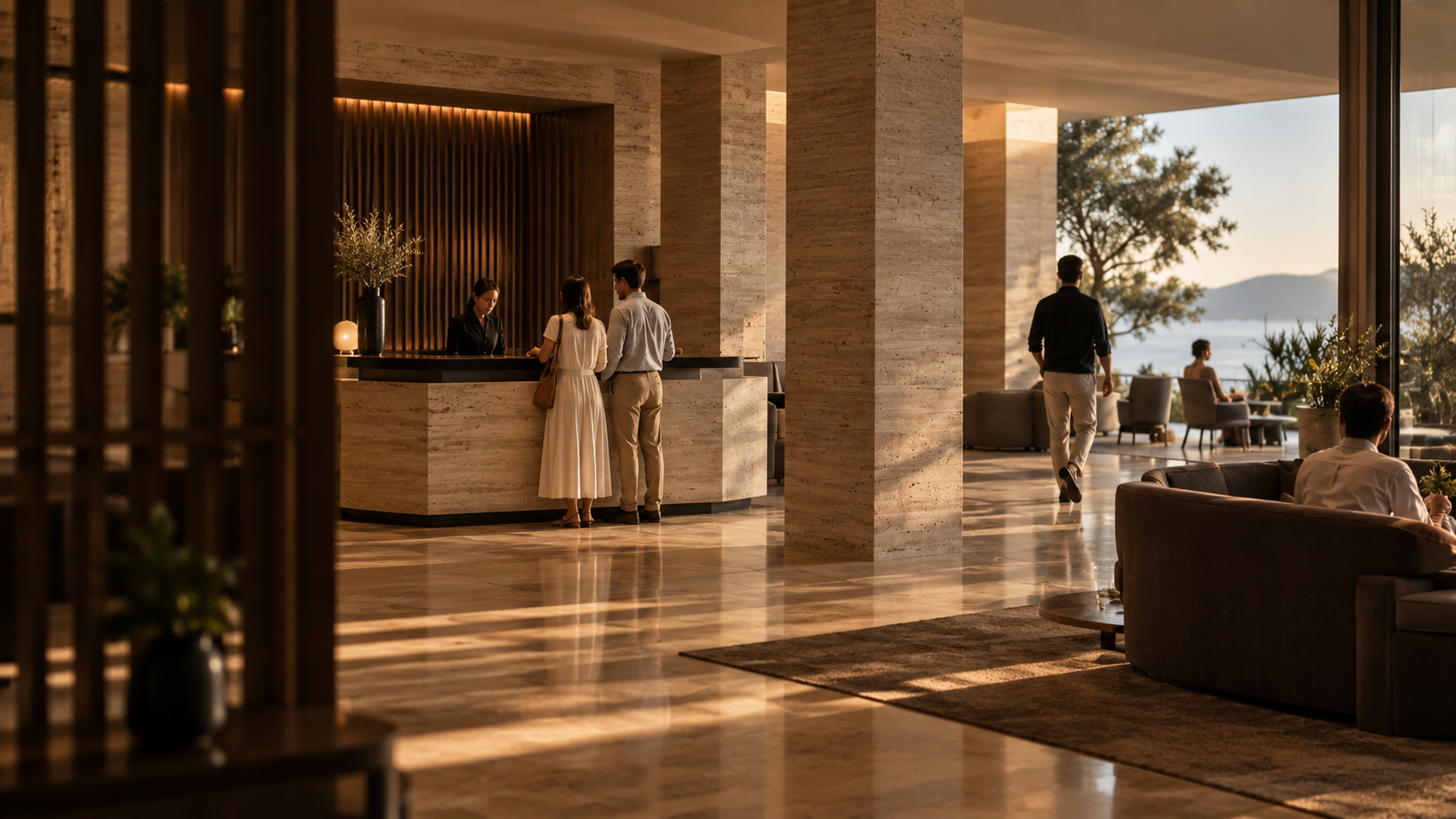
Luxury Hospitality as a Research Context
Luxury hospitality creates a particularly demanding context for understanding guest experience. Situational segmentation, price, strong brand positioning and guests' prior experience raise the reference point before arrival and shape the criteria against which the stay will be evaluated.
Value is formed across several dimensions at the same time: quality of execution, physical environment, sensory experience, human interaction, time and effort, degree of recognition, and the relationship between expected and experienced value. As a result, operationally correct execution does not necessarily produce the same strength of evaluation for every guest.
A hotel stay unfolds over time, through a sequence of encounters, decisions and interpretations. HUME studies where the gap between the experience the hotel intended to create and the experience the guest actually had emerges within that process, and which parts of that gap have the greatest influence on perceived value, recommendation, spending and return.